Watershed Science in Action
How we’re caring for healthy rivers and watersheds.
SJTA member agencies actively monitor the Stanislaus and Tuolumne River watersheds to understand how changing conditions affect fish, habitat and water supplies. By studying how the system works over time, our member agencies and their partners effectively manage and improve watershed conditions for wildlife as well as local communities and farms.
What Makes a Watershed Healthy?
A healthy watershed supports both natural ecosystems and the people who depend on them. Its health is shaped by how water, habitat, fish and the surrounding landscape work together—not by any single measure.
Fish and other aquatic species need the right combination of conditions at different stages of their lives. Our member agencies and their partners regularly monitor these factors throughout the watershed to understand how well the river system is functioning and where improvements may be needed.
Explore the interactive river diagram below to learn how each component contributes to watershed health.
How Do We Measure Watershed Health?
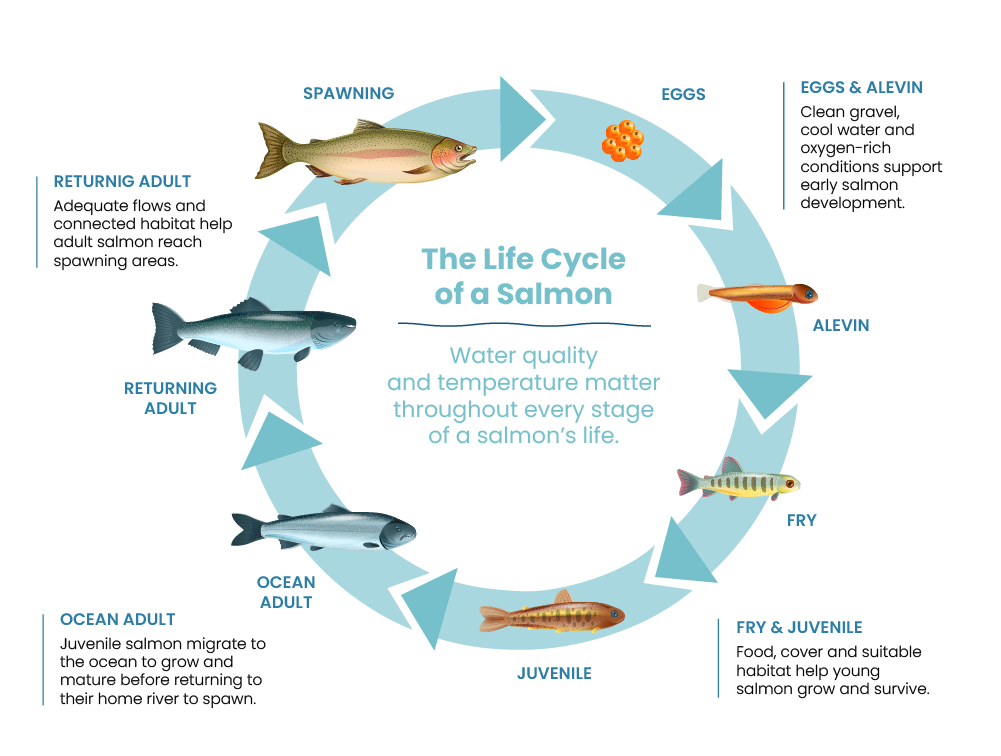
Fish are especially useful indicators of watershed health because their health and survival reflect many of the conditions around them. By monitoring fish throughout their lifecycle, our member agencies and their partners can better understand how well the watershed is functioning–and where improvements may be needed.
Within the Stanislaus and Tuolumne Rivers, Chinook salmon are a critical species that act as a key indicator of watershed health.
What Can Fish Tell Us?
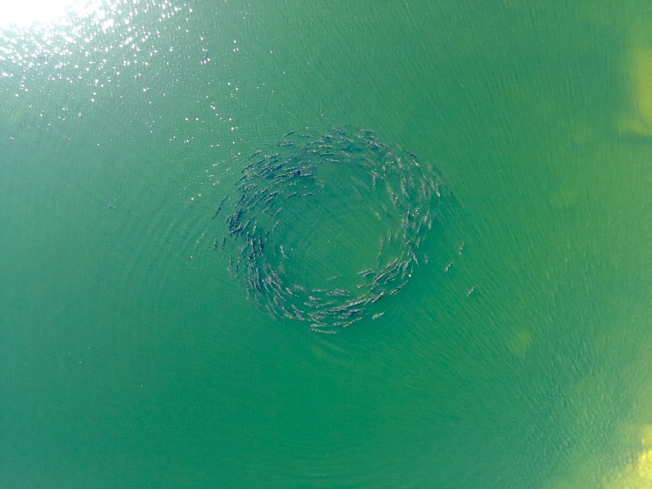
SJTA member agencies and their partners monitor fish populations on the Stanislaus and Tuolumne Rivers to better understand how many fish are present and how populations change over time. Key fish species include spring and fall-run Chinook salmon as well as rainbow trout.
A July 2025 drone survey of nine pools in the Tuolumne River counted 1,154 spring-run Chinook, with biologists estimating that more than 1,200 fish may have been present. On the Stanislaus River, long-term monitoring recorded approximately 8,000 returning salmon that same year.
Tags, sensors, drone surveys and field observations can reveal when fish move and which parts of the watershed they use. On the Tuolumne River, Turlock and Modesto Irrigation Districts and their partners use video monitoring and rotary screw traps [popup link with photo/description] to track adult movement and juvenile salmon as they begin their migration downstream.
On the Stanislaus River, monitoring near Riverbank tracks returning adult salmon, while a rotary screw trap near Oakdale samples juveniles migrating downstream. Together, these observations help researchers understand migration timing at different stages of the salmon life cycle.
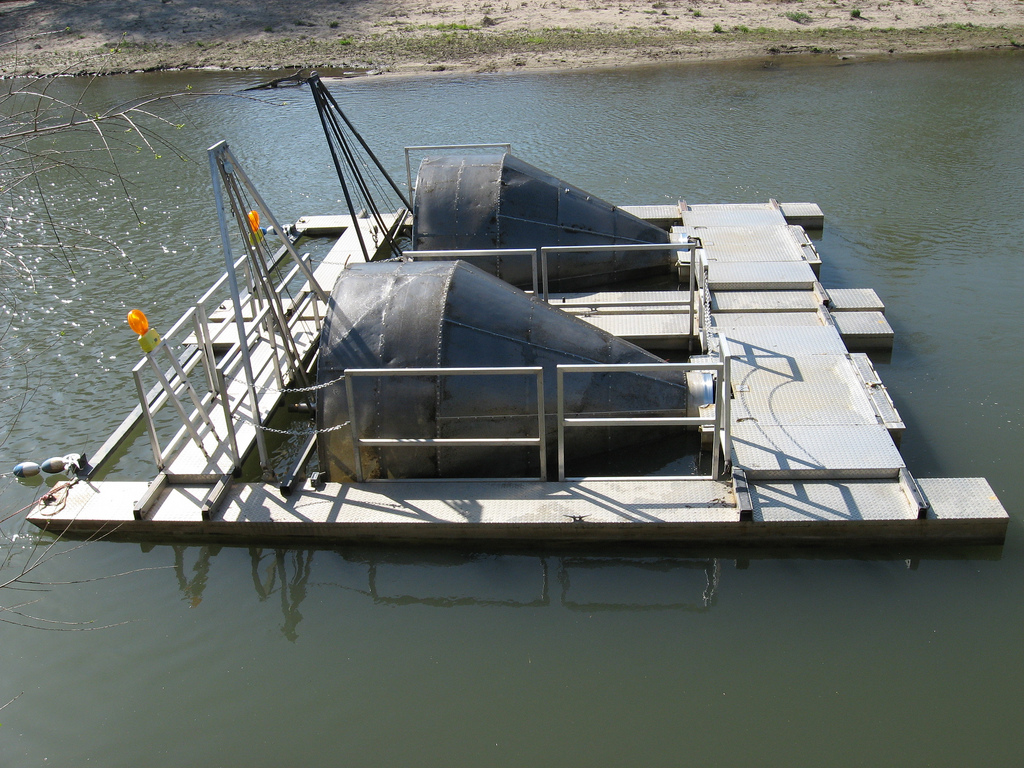
Rotary Screw Traps: floating devices used to safely capture and monitor juvenile fish as they migrate downstream. River current turns a large cone-shaped drum, guiding a small sample of passing fish into a holding tank.
Photographed by FISHBIO
Survival monitoring helps us identify where and when fish encounter difficult conditions. Our member agencies use this information to better understand those challenges and inform future management and habitat actions. San Francisco Public Utilities Commission(SFPUC), Turlock Irrigation District (TID), and Modesto Irrigation District (MID) have teamed up to design and implement a collaborative habitat restoration program along the Lower Tuolumne River to improve conditions for salmon and other native aquatic species.
Spawning surveys help SJTA member agencies locate fish nests, known as redds, and assess whether fish are successfully using available habitat to reproduce. In 2025, the Tuolumne River Partners—MID, TID and SFPUC—expanded monitoring to document spring-run Chinook spawning activity. Our member agencies and their partners are also evaluating how spring-run and fall-run Chinook use available spawning habitat.
Long-term monitoring helps local researchers separate normal year-to-year variations from broader population trends. On the Stanislaus River, South San Joaquin Irrigation District (SSJID) has supported fisheries research and monitoring on the river since 1991, and they fund annual snorkel surveys to track rainbow trout populations over time.
From Monitoring to Action
Watersheds are complex, dynamic systems. Conditions on the Stanislaus and Tuolumne Rivers can change from season to season as flows, temperatures, habitat and fish populations respond to many different factors.
That’s why SJTA member agencies use adaptive management—an ongoing process of monitoring conditions, learning from the results, and adjusting actions as new information becomes available. Rather than assuming there is one permanent solution, watershed strategies evolve as the rivers change and our knowledge grows.
A recent example on the Tuolumne River shows how this process works:
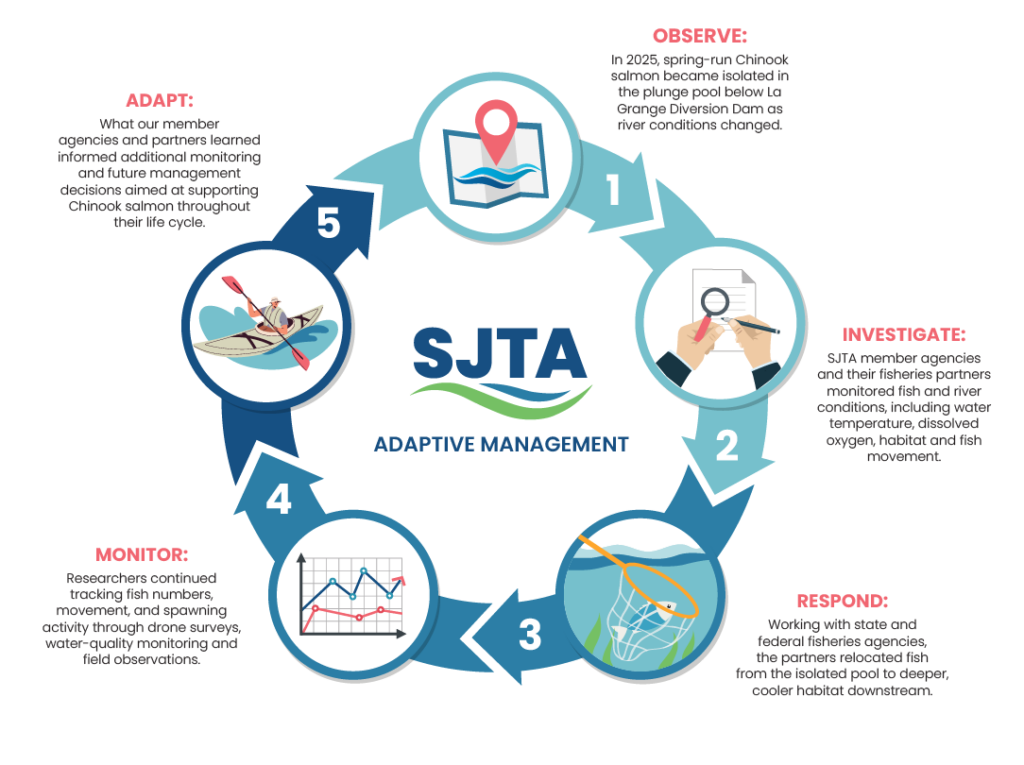
Adaptive management recognizes that the first answer may not always be the final one. Each study, monitoring season and restoration project adds to what SJTA member agencies understand about the Stanislaus and Tuolumne Rivers, helping build a clearer picture of how to best manage these watersheds over time.
Our work is grounded in sound science, local expertise and regional collaboration. Monitoring and research provide the evidence needed to evaluate changing conditions, while local water managers and scientists bring decades of experience working within these river systems. Collaboration across member agencies and watershed partners helps turn that knowledge into coordinated action.
Together, this approach allows SJTA members to refine strategies and improve restoration efforts as new information becomes available. Over time, those lessons support better-informed decisions that improve watershed conditions while continuing to meet the needs of the communities that depend on these rivers.
Science in Action Across the Watershed
Science becomes most useful when it is connected to meaningful decisions and actions. Projects throughout the Stanislaus or Tuolumne Rivers illustrate how monitoring, habitat restoration and collaboration can improve our understanding of the watershed.
Following Spring-Run Chinook Salmon
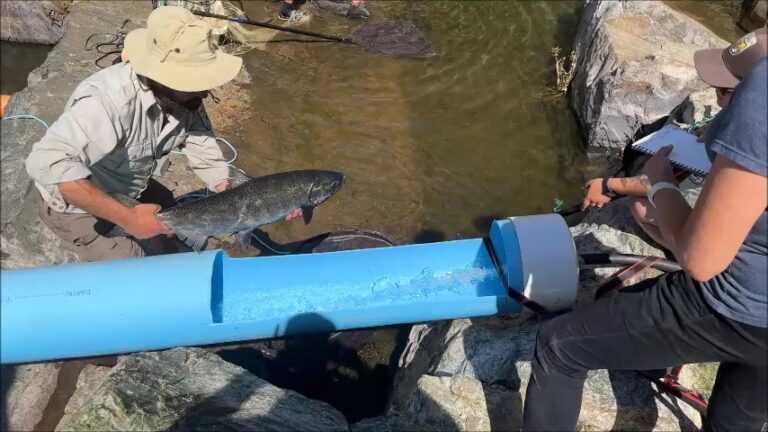
In 2025, more than 1,200 adult spring-run Chinook salmon from the San Joaquin River Restoration Program entered the Tuolumne River. Scientists tracked the fish using drone surveys, real-time water-quality monitoring, habitat mapping and field observations.
That monitoring revealed that some salmon had become trapped as river conditions changed. SJTA member agencies and their partners responded by relocating them to deeper, cooler pools to support their survival.
Understanding Predation on the Stanislaus River
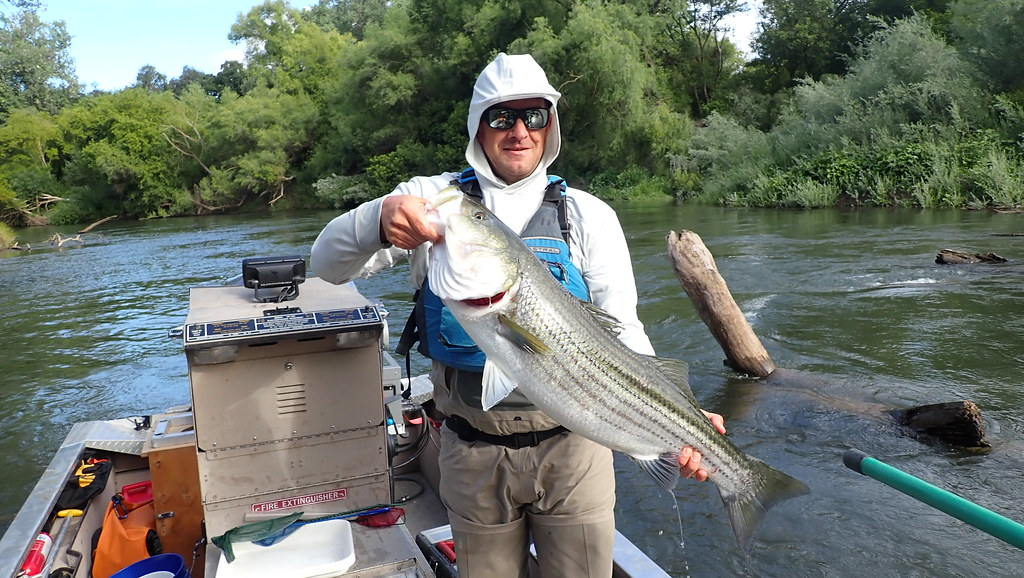
For more than 20 years, South San Joaquin Irrigation District and its partner Oakdale Irrigation District have supported fishery studies on the Stanislaus River. One study analyzed monitoring data from 39 locations between 2019 and 2021 to examine when and where non-native striped bass occupy the river.
Researchers found that predatory large and small striped bass entered the area at different times and used different portions of the river. The findings provide insight into where juvenile salmon may encounter predators, which helps inform management actions intended to improve native fish survival.
Continue Exploring the Watershed
Understanding the San Joaquin Tributaries
Follow the San Joaquin River and its tributaries from their Sierra Nevada headwaters through the communities, farms and ecosystems they support. See how the watershed has developed over time and why its future depends on local expertise combined with sound science and regional collaboration.
Collaborative Watershed Stewardship
Science provides the information, but collaboration turns that knowledge into beneficial action. Explore how SJTA member agencies, restoration organizations and other partners work together to manage shared resources and support the long-term health of local watersheds.
Stay Connected With SJTA
Learn more about SJTA’s work, follow current watershed projects and stay informed about future educational opportunities.